
Web Clipper
The Ultimate Integration
Having mastered Obsidian’s fundamentals in the five-part tutorial, you’re ready to explore bonus topics. Let’s transcend the boundaries of your vault by integrating external research and artificial intelligence.
Chapter XIII: The Web of All Knowledge
Beyond Internal Intelligence
“Watson,” Holmes declared, pacing before the fireplace with renewed energy, “we have constructed a formidable internal intelligence system. Yet even the most perfectly organized vault contains only what we already know. True detective mastery requires seamless integration with the vast repositories of external knowledge.”
“Consider the detective who relies solely on personal observations versus one who systematically incorporates public records, press accounts, and expert analysis. The difference is not merely additive—it’s exponential.”
“Fortunately, the Obsidian Web Clipper transforms any webpage into a properly formatted, searchable note in your vault. External intelligence becomes as accessible as your personal observations.”
Establishing Your Research Pipeline
How do I install the Obsidian Web Clipper?
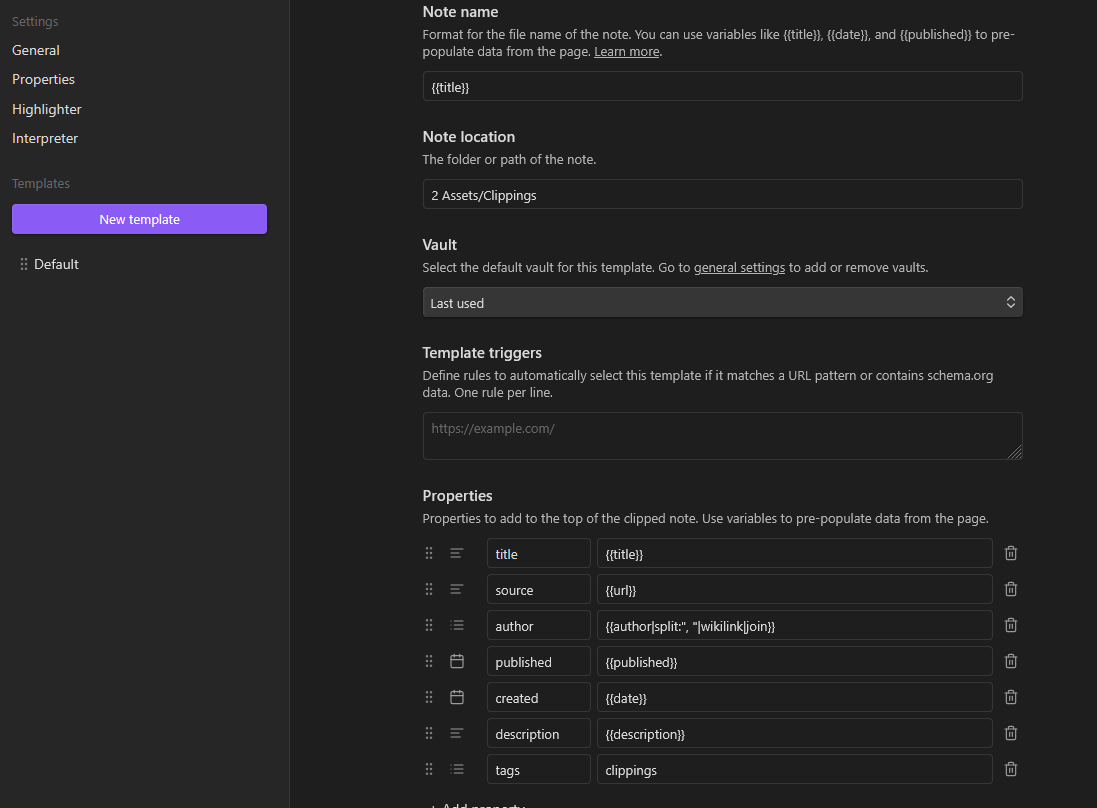
Testing Your External Intelligence System
“Let us demonstrate with an amusing example, Watson—research on fictional companies, particularly relevant given our recent encounter with Sir Reginald’s questionable venture capital firm.”
How do I capture web content?

“Excellent! The article appears in your vault, properly formatted and immediately searchable.”

Selective Intelligence Gathering
“But Watson, not every webpage deserves complete capture. Navigate to the Venture Capital Wikipedia Page—as you observe, it’s quite verbose. We require selective extraction.”
How do I capture only specific content?

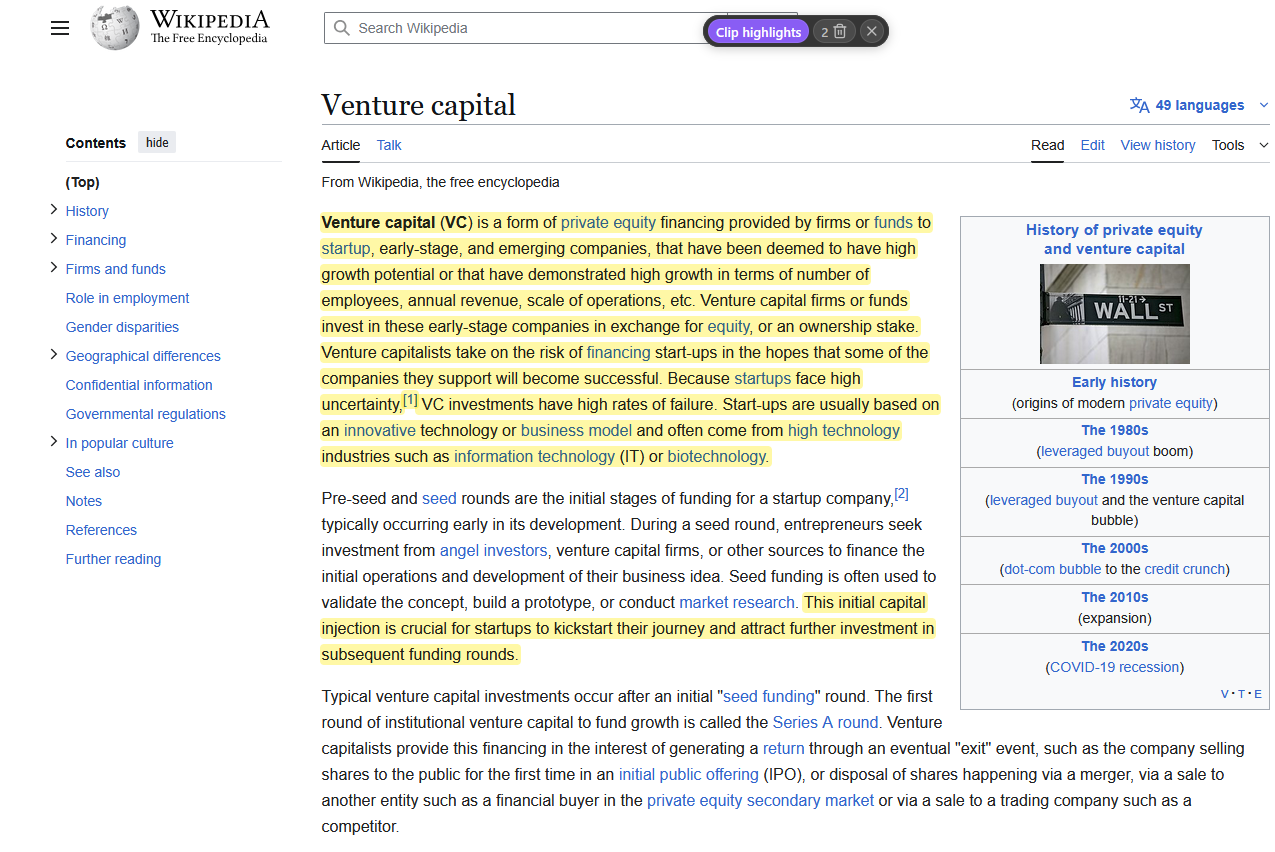

“Perfect! Only the essential information captured, with source attribution preserved.”
AI-Enhanced Intelligence Capture
“But Holmes,” Watson ventured hesitantly, “what if I wanted the complete page content with an intelligent summary at the top? I realize it would require manual effort to craft such summaries…”
“Nonsense, Watson! Your instinct is sound, and the solution more elegant than you imagine. We live in an age where Large Language Models can summarize pages automatically.”
Modern web clipping can leverage artificial intelligence to automatically generate summaries, extract key points, and even answer questions about captured content. This transforms passive archiving into active intelligence gathering.
How do I enable AI capabilities?


“Magnificent! Automatic summarization, full content preservation, and proper formatting—all in a single operation.”
Privacy-Conscious AI Integration
“Watson,” Holmes said, setting down his pipe with a thoughtful expression, “while cloud-based AI services offer remarkable convenience, the discerning detective must consider the implications of transmitting sensitive information to external servers.”
“You mean the clipped content travels through their systems?” Watson asked with concern.
“Precisely! Every article, every snippet of research passes through remote infrastructure. For routine public information, this poses no concern. But consider the implications when clipping internal corporate documents, legal materials, or confidential case information.”
External AI services process your clipped content on remote servers. For sensitive investigations—whether personal, professional, or confidential—this presents potential privacy and compliance concerns.
“Fortunately,” Holmes continued with satisfaction, “the solution is elegant: self-hosted AI models that process information locally, ensuring complete privacy while maintaining analytical capability.”
Understanding Self-Hosted AI Options
The modern detective has three distinct approaches to self-hosted AI:
1. Cloud Self-Hosting: Deploy models on your organization’s cloud infrastructure (Azure, AWS, GCP)
2. On-Premises Hosting: Maintain models on your company’s internal servers
3. Local Edge Computing: Run models directly on your own machine (recommended for maximum privacy)
Configuring Cloud or On-Premises AI
“For those working within organizations,” Holmes explained, “the first two options typically involve coordination with your technical department.”
How do I connect to cloud or on-premises AI?

“This approach,” Holmes noted, “provides privacy while leveraging enterprise-grade infrastructure and compliance frameworks.”
Local AI with Ollama: Maximum Privacy
“However, Watson, for the truly independent detective—or when handling the most sensitive matters—nothing surpasses running AI directly on one’s own machine.”
Local AI deployment requires basic understanding of system configuration and hardware capabilities. If unfamiliar with command-line interfaces or system resources, consider cloud or on-premises options first.


Choosing Your AI Strategy
“The question becomes,” Holmes mused, “which approach suits your investigative practice?”
AI Strategy Decision Framework
“Remember,” Holmes concluded, “privacy is not paranoia—it’s professional responsibility. The method you choose should reflect both your needs and your principles.”
Integrating External Intelligence
“Observe the true power, Watson—every clipped article immediately connects to your existing investigation network.”
How do I connect external research to cases?
“Your knowledge network now extends beyond personal observations to include the vast corpus of external intelligence, creating exponentially richer investigative capabilities.”
External Intelligence Mastered, Advanced Integration Awaits
“Watson,” Holmes said, closing the Web Clipper with satisfaction, “we have now constructed a sophisticated external intelligence system—web research flows seamlessly into our vault, enhanced by AI while maintaining privacy control.”
“Remarkable, Holmes! Though I confess I’m still manually reviewing all this accumulated intelligence. Surely there must be a more efficient approach?”
Holmes’s eyes gleamed. “Indeed there is, Watson. In our final chapter, we shall transform artificial intelligence from a mere summarization tool into an active investigative partner—one that can read our entire vault, identify patterns across months of observations, and generate sophisticated analytical synthesis.”
Advanced AI integration through Claude Desktop’s MCP protocol, specialized tools for unique investigative needs, and the complete synthesis of everything you’ve learned into a professional workflow that operates like natural thought itself.
Your Arsenal Thus Far:
- Template Automation: Consistent documentation
- Dynamic Intelligence Networks: Adaptive databases
- Visual Analysis: Pattern recognition systems
- Professional Presentation: Legal-standard organization
- External Research Integration: Privacy-conscious web intelligence
- AI-Enhanced Capture: Intelligent content summarization
“The final piece, Watson, transforms observation into understanding at superhuman speed.”